Material Heritage & the Chilean October Crisis 20XX
Chilean National Heritage Days: Fri. 28 & Sat. 29 May 2021
A 1.5 hour walking tour of the protest destruction of built heritage in Ground Zero.
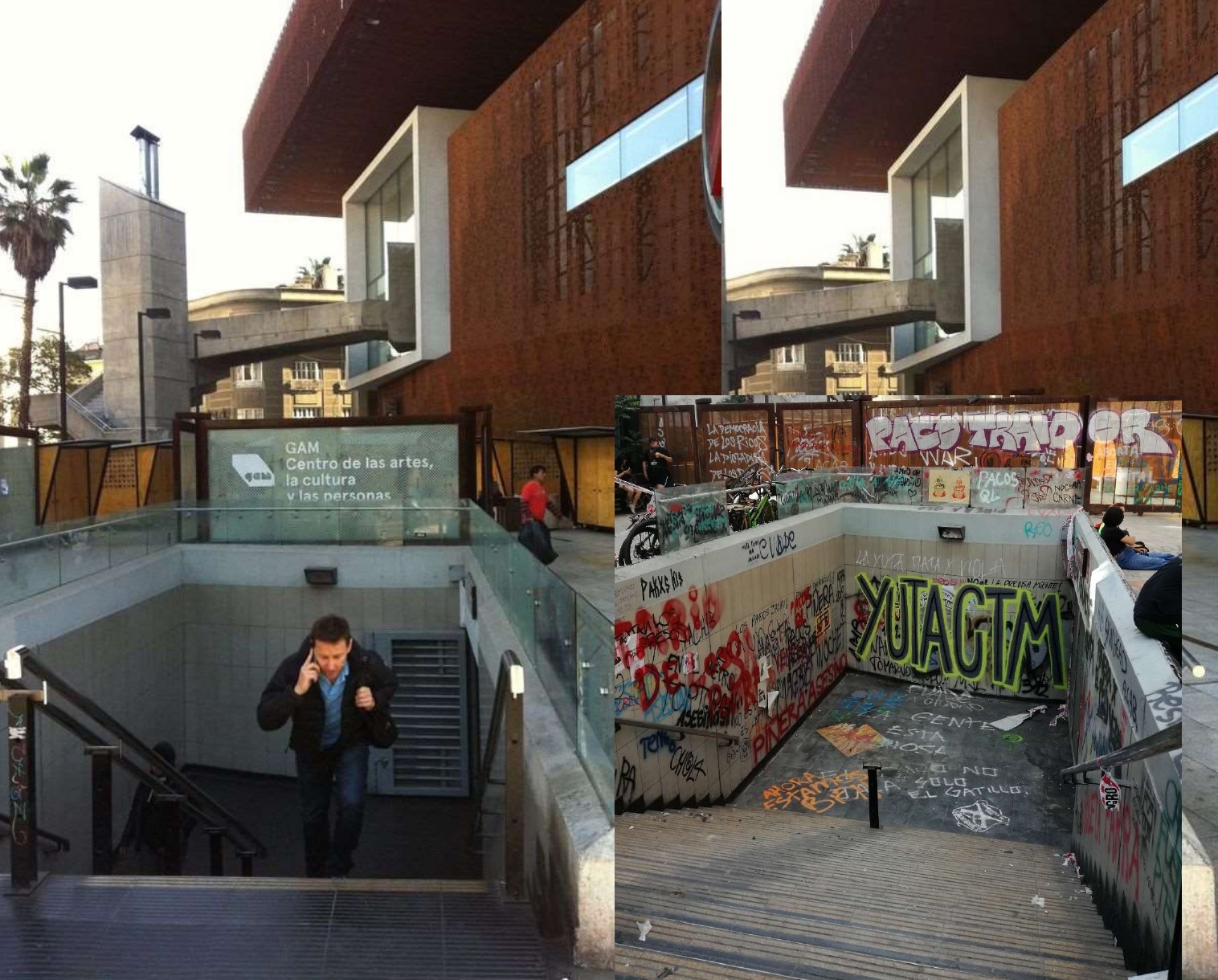
11:00 am. Meet at the north entrance to Metro Univerdad Catolica, Alameda Avenue, Barrio Lastarria, Santiago, Chile (image)
The heritag Barrio Lastarria and adjacent Barrio San Borja are located in what is now known as Ground Zero, the epicentre of five month Chilean October Crisis 2019 that was suspended by COVID 19 quarantine in March 2020. When quarantine was lifted in October 2020, the unprecedented protest violence and destruction resumed with the destruction by fire of two historic churches to mark the first anniversary of 18 October, 2019. The Chilean October Crisis was initiated on that day with the simultaneous attack by protesters on 20 metro stations and their city wide looting, arson and vandalism of built heritage. This form of extortion rapidly spread to 11 of Chile's 15 regions. Ground Zero was established by this violence early in the crisis.

In all, 18 buildings were set on fire in Ground Zero, a soccer field size area of pavement was smashed up with hammers and crowbars by protesters to make missiles to throw at police and every piece of pedestrian urban infrastrcucture and street lighting was destroyed, every vertical surface covered in graffiti and every public monument defaced. Three heritage listed buildings in Ground Zero were destroyed by fire and every glass surface for a radius of 1 kilometre had to be covered in welded sheet metal to protect what remained of building interiors after ransacking and wanton destruction.

On 8 November 2019, the Asunción Parish church (1876) was ransakced and burnt for the first of three times, it would be destroyed by fire on 18 October 2020. On 12 November, 2019 the Veracruz church (1857) was attack by protesters who set ablaze the wooden doors with accelerant, and the bell tower roof and interior were severely damaged by fire. On January 4, 2020, 1000 hooded protesters attacked 100 police defending the San Francisco de Borja church (1876) and the Police Monument 1989) and, now banded from using non-lethal responses, surrendered the church to rioting vandals. This church was destroyed by hooded protesters and fire on October 18, 2020. By the end of November 2019, the cost of material damage to the axes running east and west of Ground Zero was 106 million USD, not including the damage to the Metro.

This walking heritage/cultural tour is a modified version of the tour that Anthony McInneny prepared and delivered for the resident organisation El Barrio Que Queremos (the Barrio We Want) for theNational Heritage Week in May 2019. He has since resigned from that organisation because of their lack of advocacy for the protection of the barrio's built heritage. Prior to the October Crisis, Barrio Lastarria was a national and international tourist destination for its built heritage, living barrio life and integration of arts and culture into the built environment. Post Chilean October Crisis 2019-2021 and all built and cultural heritage had been defaced or destroyed by protesters. Most is now covered in thick coat of nuetral paint though the welded metal protection is still in place. This tour follows the chronolgy of protester destruction to revisit the hertiage of Ground Zero, past and future. We start where the vandals started with the Metro and end where these criminals have permantly reshaped public life, public space and Chilean Heritage- Plaza Baquedano - where the monument to General Manuel Baquedano was removed by the National Council of Monuments in March 2021 to protect it from protester violence and destruction.



 Posts
Posts

