Architects for Peace's editorials
LATEST EDITORIALS...

20 July 2009

Climate Change: Building a different future

When the topic of climate change comes up in conversations with friends, acquaintances and—more and more frequently—with complete strangers, I sometimes find myself making a comment on East Timor. Perhaps all too casually, I like to suggest that Timorese households living in remote rural communities are likely to deal better with climate change than will my family in urban Melbourne. Timorese communities have generations of experience at coping with adversity in a country where crop failure might mean starvation, where a serious injury can lead to a lifetime of penury and where illness all too often results in death. The resilience and joy found in Timorese communities is remarkable to behold. Clearly, no society would aspire to the hardships found in East Timor simply to foster the resilience that it engenders. Nevertheless, I think it is true that if climate change wreaks havoc on the global economy, the difficult life of a rural household in a remote part of East Timor would go on much as it does now. Not so life in Australia and in other over-developed nations of the world. For once, I think to myself, something is going to affect ‘us’ much worse than it will affect those in the developing parts of the globe.

The likelihood that those in the over-developed world may suffer tends to concentrate our collective attention in a dramatic way. The saturation media coverage of the recent swine flu pandemic illustrates this well. Swine flu has proven deadly and the WHO reports that more than 300 have died as a result of catching the disease since the first death was recorded in May. Millions of poor people die every year from preventable diseases but if rich people start to die too, it’s big news amongst the rich people.

Given that, one might expect some cause for optimism when it comes to global warming. The world’s best scientific and economic advisers have confirmed that climate change will indeed wreak havoc on our over-developed economies. Agencies as diverse as Oxfam and the World Bank agree that disastrous impacts also await those in the developing world. Surely, concern for such an outcome would be sufficient cause for us to take action.

Tragically, I don’t believe that the human species—and more specifically, those of us with the power to do so—will cut greenhouse gas emissions enough to avoid catastrophic climate change. I think our current ecosystems are doomed. I believe that we could avoid catastrophic climate change— that point needs to be made very clearly—it’s just that I don’t think we will. It feels dreadful to put that comment in print. Whilst I have become accustomed to thinking that way putting it in writing makes me feel as if I am complicit in a terrible crime.

There are myriad reasons that lead me to this conclusion. Rather than confront these, however, I regularly delude myself by focusing on the potential for change. In Australia we have a government that was elected on a promise to combat climate change; in the state where I live (Victoria), a member of parliament has resigned his position to head a large-scale program to install electric vehicles in Melbourne; China is installing a new wind turbine every two hours and is fast becoming a leader in renewable energy; Germany has a huge solar PV program with millions of systems installed; under Barak Obama a US President has finally acknowledged the severity of global warming and committed the United States to reducing GHG emissions.

The climate change problem, however, appears much bigger than our timid, lagging responses. Aside from the fact that global emissions have swelled since the Kyoto protocol was signed and that we now face an even tougher path to prevent catastrophic climate change, here are three of the reasons why I’m pessimistic about our chances of dealing with global warming—climate change indicators are worse than expected; high profile sceptics continue to press their case; and people like me continue business-as-usual. Firstly, climate change indicators. The Intergovernmental Panel on Climate Change (IPCC) provides an estimate of trends in climate change indicators with an upper and lower boundary to indicate the band of uncertainty in future years. As climate change modellers have looked back on recent data and compared it to the predictions reported by the IPCC we might expect to see the results spread throughout the range of uncertainty. Contrary to this, however, a synthesis report by leading climate change scientists at the recent Copenhagen Climate Change conference states:

Recent observations show that greenhouse gas emissions and many aspects of the climate are changing near the upper boundary of the IPCC range of projections. Many key climate indicators are already moving beyond the patterns of natural variability within which contemporary society and economy have developed and thrived. These indicators include global mean surface temperature, sea-level rise, global ocean temperature, Arctic sea ice extent, ocean acidification, and extreme climatic events. With unabated emissions, many trends in climate will likely accelerate, leading to an increasing risk of abrupt or irreversible climatic shifts.
In other words, our best scientific modelling has tended to underestimate the rate at which climate change is developing. The situation is deteriorating more quickly than we thought. Tim Flannery reports that James Lovelock, the pre-eminent earth systems scientist, believes that ‘the causes of the climatic shift are now so entrenched that they are in all likelihoods irreversible’. For Lovelock, we have already passed the ‘tipping point’ at which climate change moves beyond our ability to control.

Nevertheless, there remain sufficient high-profile sceptics in our societies to create just enough doubt about the problem to dilute the political will to take serious action. In Australia this mantle of high-profile sceptic has passed from our previous Prime Minister, John Howard, to Senator Steve Fielding (a member in the upper house of our Federal Parliament). Senator Fielding was elected ‘accidentally’ with just 0.08% of votes through a preference deal with the Australian Labor Party. Senator Fielding, who now holds the balance of power in the upper house of the Australian parliament, is a climate change sceptic. In an ironic twist, at the same time Barak Obama was committing the United States to dealing with climate change, Senator Fielding was undertaking a ‘fact finding’ tour of the US asking prominent politicians and scientists whether global warming is real or imagined. In his quest to take a ‘balance view’, Senator Fielding has somehow sided with the fringe of society who think that global warming remains an unproven theory and that taking action to reduce GHG emissions will make us all worse off. As a consequence, this person will now vote against legislation that proposes a modest cut in Australian emissions. If the sea level rose by a metre tomorrow no one would be in a position to deny what had happened. Whilst prominent persons such as Senator Fielding, however, publicly deny the signs of climate change too many others will continue to overlook the fact that sea levels are rising by a few millimetres a year.

Perhaps the most compelling cause for my pessimism, however, is my own behaviour. I accept the IPCC’s advice that the climate system is unequivocally warming and that human activity is very likely the cause. I wholeheartedly support local, national and international action to reduce GHG emissions and combat climate change. I would also be quite happy to pay more than my share of the cost to make that happen. Yet, I live in a society addicted to cheap energy and I remain part of the problem. I know that I will take another international plane flight for work (and even for leisure); I will continue to drive my fossil-fuelled car; I will use more fossil fuel to heat my house; I will buy cheese flown in from France, wine shipped in from New Zealand, and bananas trucked down from Queensland; I will buy cheap manufactured goods imported from China, exporting my GHG emissions to the developing world; I will buy a newspaper and so contribute to the pollution associated with printing, transporting and recycling the newsprint; and in a thousand other ways I will continue to stamp my oversized carbon footprint on the planet’s ecology.

And it won’t just be me that continues to pollute. I’ll keep doing these things because 20 million other Australians will join in with me, as will hundreds of millions of other people from the over-developed world. Between us (and our antecedents), we have been responsible for three quarters of GHG emissions. If we haven’t yet changed our ways, how can we possibly expect those in developing nations to take action? As pointed out in a recent Oxfam briefing paper on climate change, ‘the average Australian emits nearly 5 times as much as an average Chinese, and the average Canadian emits 13 times as much as the average Indian’. Those of us in over-developed countries would have to go ‘backwards’ (as many in our society would see it) quickly and significantly if we are to allow developing nations to improve their living conditions and at the same time reduce GHG emissions globally. It’s very hard to see that happening.

Climate change is often discussed at Architects for Peace meetings and our members are regularly involved in rallies and conferences promoting responses to global warming. I have no doubt that as an organisation we will continue such efforts. I hope that they are successful. I also hope that our response to climate change will recognise the right of developing countries to emit carbon pollution as they continue their development and promote responses that are equitable at a national level. If James Lovelock is right—and it is already too late to avoid catastrophic climate change—then in addition to calling on our communities to fight climate change we also need to be planning and building for a very different future.

Matthew Bond
Architects for Peace, July 2009


14 March 2008

IDP Camps in East Timor

Those who have followed the fortunes of independent East Timor in the years since its violent separation from Indonesia in 1999 will no doubt have been dismayed by events of the last eighteen months. Tensions within the armed forces escalated into several violent confrontations including the murder of a group of unarmed police by renegade members of the East Timorese army. Civil society all but collapsed. Police disappeared from the streets, schools and universities shut down, entire government departments were deserted, shops were boarded up and the nights were filled with looting and arson. Shocking as these events were in themselves, they gave rise to an even greater calamity as a dramatic rift was opened in Timorese society, splitting communities along ethnic lines and resulting in 100,000 people fleeing into rural areas and makeshift internally displaced person (IDP) camps.

Camps sprang up all over Dili, East Timor’s capital. There was a clear preference for institutions operated by the Catholic Church—schools, convents, seminaries and churches themselves. In one convent school 13,000 people crammed inside the gates each night, sleeping along corridors and porches, under trees and tarpaulins and occupying every conceivable space. Another 10,000 people squeezed into the car park opposite the main United Nations (UN) compound, a camp sheltering many families of Timorese UN staff. In the days following the arrival of Malaysian and Australian peacekeeping forces in late May 2006, informal camps were established wherever facilities were being protected by soldiers. Tens of thousands of people set up temporary shelter in the park across the road from the port, in the grounds of the national hospital and in open fields adjacent to the airport. A month after the commencement of the ‘crisis’ (as the events were known locally), more than 60 camps had been formally registered by the Timorese government.

Conditions within all the camps were very difficult. There was insufficient space; shelter was improvised and inadequate; food was in short supply because all the shops were closed; people were required to carry water; and toilets were generally shared by several hundred people and regularly broke down. A sense of despair accompanied the physical conditions. People were unable to go to work and children were no longer attending school. Those sheltering in camps spent each night in fear of attack by violent gangs and often woke to learn that their house had been burnt or looted. The camps appeared to be such a difficult environment in which to live that those of us supporting the humanitarian response expected them to disperse as rapidly as they had appeared. We expected that restoration of order by the international peacekeepers would facilitate people returning home in a matter of weeks and that all the major camps would be emptied by the onset of the wet season in November. Although most of the smaller camps have now closed, the larger camps have not. Now, eighteen months after they were spontaneously established these camps are firmly entrenched in Dili’s urban landscape.

Several government proposals to close or relocate camps have faltered in the face of complex motivations for families to remain. Humanitarian agencies continue to provide food to registered IDPs encouraging ongoing involvement with IDP camps; government efforts to rebuild homes burnt during the violence have replaced only a small number of the houses lost; ethnic tensions remain in many communities preventing families returning to their homes even if they were not destroyed; and insecurity of title to land discourages many families from carrying out their own rebuilding efforts (most land title records were destroyed in 1999 and their are often disputes over conflicting Portuguese and Indonesian era titles). The camps present a seemingly intractable problem for the government and it would not be surprising to see people living in tents in the hospital grounds or in the park across the road from the port a generation from now.

From an outsider’s perspective (in my case, that of a foreign humanitarian assistance worker) the camps appear such depressing and unpleasant places to live that one might expect them to have closed long ago without any government prompting. I worked with Oxfam in a dozen of the camps for several months, helping to improve access to water and sanitation, so I knew the physical condition in many camps well. I worked extensively with Timorese camp managers and liaison staff and so also knew something of the management and political structures in operation. I had never spent the night in an IDP camp, however, nor visited one socially so I knew next to nothing of how a resident might view their life there.

An Australian colleague provided me with an insight into the residents’ point of view. She lived with a Timorese family in the Metinaro IDP camp for several days at a time and invited me for a visit. Her host family’s house in Dili had been destroyed and they had built a small palm-leaf hut in the Metinaro camp along with thousands of other families. The roof and walls were constructed from woven palm leaves and the floor was compacted earth. In contrast to nearby Dili, there was no electricity or running water. Up to ten people lived in the family’s two small rooms. When I arrived I was welcomed in and offered coffee. Chairs were improvised from up-turned tins, formerly full of UN-funded protein biscuits. As we drank our coffee and chatted away, life for this family went on around us and they explained why they remained in the Metinaro camp rather than return to Dili. A friend had offered them accommodation in a spare house in Dili but the family was unsure how they might be received in the neighbourhood. Having had their house and possessions destroyed in 1999 and then again in 2006, they were very reluctant to put at risk the few things they had managed to save or acquire again. They also noted that it had been expensive to buy the palm leaves used to build their hut in the IDP camp. They felt they had built up a stake in the camp that they didn’t want to walk out on. I was surprised to see the family living reasonably happily in what I had thought were the wretched condition in the Metinaro IDP camp. It had been difficult to see past my urban Australian perceptions of ‘home’ and understand why this family might choose to crowd into the dirt-floored, windswept, palm leaf hut instead of the modest comfort of their friend’s house in Dili. My visits to IDP camps to ‘help’ people had not provided me with any insight. Only by visiting the camp residents socially, on their terms, had I began to understand why people might chose to remain in the camp.

My Australian colleague has been living in remote parts of East Timor for several years. As in the Metinaro IDP camp, this often requires living in close quarters with a family, sharing a bed with two or three others, living without a toilet, running water and electricity—all the things that those of us living in places like urban Australia might consider basic necessities. Despite that, she says that she feels better/happier/more at ease/more connected living in close communities in East Timor than she does at home in Sydney or Melbourne. As we discussed this concept, we struggled to find just the right adjective for the quality of life she experienced. I might have chosen ‘more at peace’—peace in a broad sense and entirely relevant to those of us at Architects for Peace. The built environment in the Metinaro IDP camp is an important element in providing ‘peace’ for the families still living there. Not for what it so clearly lacks—running water, electricity, roads, sanitation, services—but for what it boasts—security, ownership, self reliance, opportunities for hospitality. This experience demonstrated that for those of us looking to build peace, and not just structures, there are lessons to be learnt and experience to be drawn upon wherever people are living.


Matthew Bond
Architects for Peace, March 2008

18 June 2006

Monuments to Peacefulness

Monuments to Peacefulness
By Matthew Bond

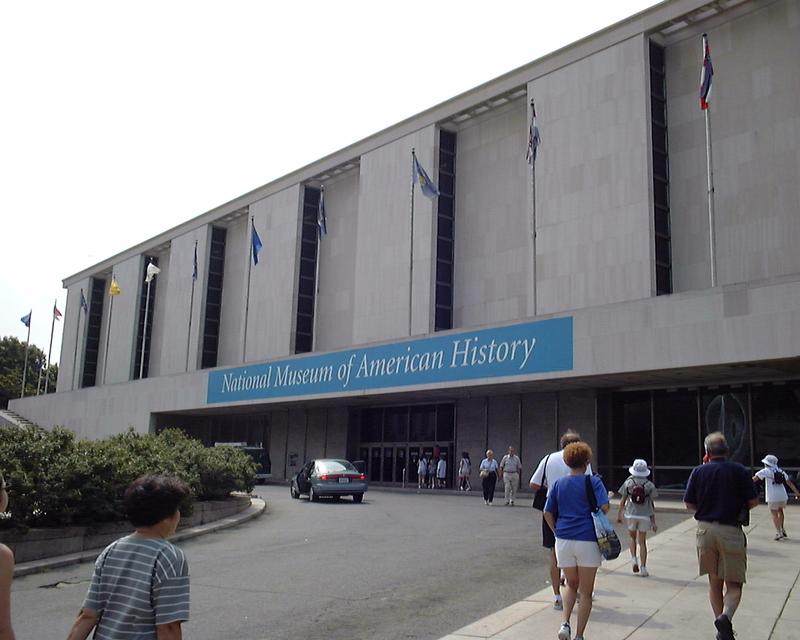
When you walk into the Smithsonian Museum of American History in Washington D.C. in the USA you are met by a huge US flag. This flag, one of seemingly thousands visible all over the US capital, was draped over the damaged section of the Pentagon (headquarters for the USA’s military organisations) in the wake of the attack on 11th September 2001. It is an appropriate introduction to the museum, a significant section of which is devoted to chronicling wars and battles in which the USA has been involved, right from the days of the violent separation from Great Britain to the current invasion of Iraq. Outside the museum Washington is full of monuments remembering – glorifying? – US involvements in wars around the globe. No doubt the line between ‘remembering’ and ‘glorifying’ war is broad and ill-defined since so much is determined by the perspective of those who view the monuments and the events related to them. This in turn highlights the pivotal importance of how we educate ourselves about the wars waged on our behalves.


Figure 1: Smithsonian Museum of American History. Source: University of San Diego


The Smithsonian museums house a wonderful collection of art and artefacts and, providing free access to the public, are very well patronised (the Air and Space Museum declares itself the most visited museum in the world). Visitors are poorly served, however, by the Museum of American History’s display on the USA’s involvement in war, not least in its misleading title: ‘Americans at War – the Price of Freedom’. Looking at the material about the War of Independence, one could be forgiven for thinking that this involved a group of American patriots repulsing a force of foreign, British occupation. There is little sense that this was just two groups of foreign invaders fighting amongst each other. Whilst it is possible to view the material presented from the perspective of sedition, treason and, dare it be said, terrorism, such an interpretation would rely upon visitors bringing that perception with them to the museum. Rather, the display on the War of Independence sets up the idea of killing for a just and noble cause which is echoed throughout the Americans at War section of the museum. Having walked through scenes from the Civil War, Great and Second World Wars and the Korean War, one arrives at the Vietnam War. The displays there identify some of the controversy surrounding that particular war and show that after years of killing some people of the time thought that it was bad idea to be involved. There is little cause to linger with those thought however, because visitors are led directly into a display about the terrorist attack on New York and Washington. Familiar images of violent destruction render the need for further thought unnecessary. No questions are asked as to how and why this might have constituted an act of war. Neither do the curators see the need to make explicit any rationale for including these images in the Americans at War exhibition. Rather the material links visitors effortlessly into displays on the invasions of Afghanistan and Iraq, seeking to justify these acts of aggression without giving rise to any awkward questions. The exhibition ends with a video showing modern day soldiers engaged in the business of shooting at ‘foreigners’ around the world in the promotion of US interests. Lincoln’s Gettysburg address is read aloud over these video images just in case the pictures were confusing – “…we here highly resolve that these dead shall not have died in vain; that this nation, under God, shall have a new birth of freedom...” Hence, visitors who might have missed the museum’s message and started to wonder whether all this killing was worthwhile were given a reminder as they left. The ultimate sacrifice for personal freedom – who could argue with that?

A few hundred metres away is another Smithsonian museum, the Museum of the American Indian which has a remarkably different approach. It presents history not as a collection of facts but as a point of view – a point of view which changes with time, is influenced by the context in which it is written and by the ideas of those who wrote it. Visitors to this museum are explicitly invited to question the material and the point of view presented. They are asked to ponder, interact with, challenge, reflect upon and learn from what they see. If the Smithsonian wanted to promote peace through its display on war, the approach taken by the Museum of the American Indian should have been adopted for the American at War exhibit. Visitors should have been invited to consider the patriotism, heroism, courage, sacrifice, greed, selfishness, narrow mindedness, aspirations – in short, the full humanity – of those killing and being killed in the many wars waged by the USA as part of its ‘price of freedom’.

Figure 2: Photo by TIM SLOAN/AFP/Getty Images


Is it likely, however, that a country which has become accustomed to waging a ‘perpetual war for perpetual peace’, and to which its economy is thoroughly enmeshed, will place much value on the notion of peace? If public space in the national capital is anything to go by, the answer appears to be no. Monuments to all manner of warriors, battles and wars abound, from tributes to 19th century South American ‘liberators’ to memorials to the Korean and Vietnam excursions, many proudly bearing the US flag. Public space in the ‘capital of the free world’ (as an radio advertisement on the United Airlines flight into Washington declared it to be) is populated by monuments which glorifying killing and waging of war. Combined with the current security arrangements – armed police seemingly on every corner, security guards and metal detectors at each monument and government building, police sirens wailing throughout the day – the startling, overall impression is of totalitarianism.

How ought we struggle to promote peace in this type of environment? Certainly it is difficult to celebrate or commemorate peace in a similar manner to the way we celebrate war, since peace is usually marked by the end of whatever war happened to precede it. It is even harder to imagine governments funding monuments to wars and conflicts avoided. That, however, is a struggle worth pursuing for those of us concerned about peace. If we are to build peaceful cultures, nationally and internationally, we need to find new ways of promoting and celebrating peace and peacefulness. These we can add to our protests against war and conflict.
Celebrating peace creatively is perhaps easier to do outside the USA, mired as it is in its current ‘war’ on a stateless and next-to-invisible enemy. Before peace can be commemorated there, perhaps protesting against war will remain the priority. For those of us unfortunate enough to live in countries which support, or are subject to, the USA’s military aggression in its pursuit of unipolar status, let’s redouble our protests against these wars. While we protest, perhaps those lucky enough to live in countries leading the pursuit of peace will show us new ways to celebrate it in our public spaces and national museums.

The author is member of Architects for Peace and travelled recently to Washington DC. He is currently working with Oxfam Australia on their Humanitarian Response Program in Timor Leste.